
Getting Started with LangChain
LangChain in Agentic WorkFlow makes building AI applications as simple as connecting visual nodes. Instead of writing complex code, you drag and drop components to create sophisticated AI workflows that can think, reason, and act.
Think of it like building with smart LEGO blocks - each piece has a specific AI capability, and you connect them to create powerful automation.
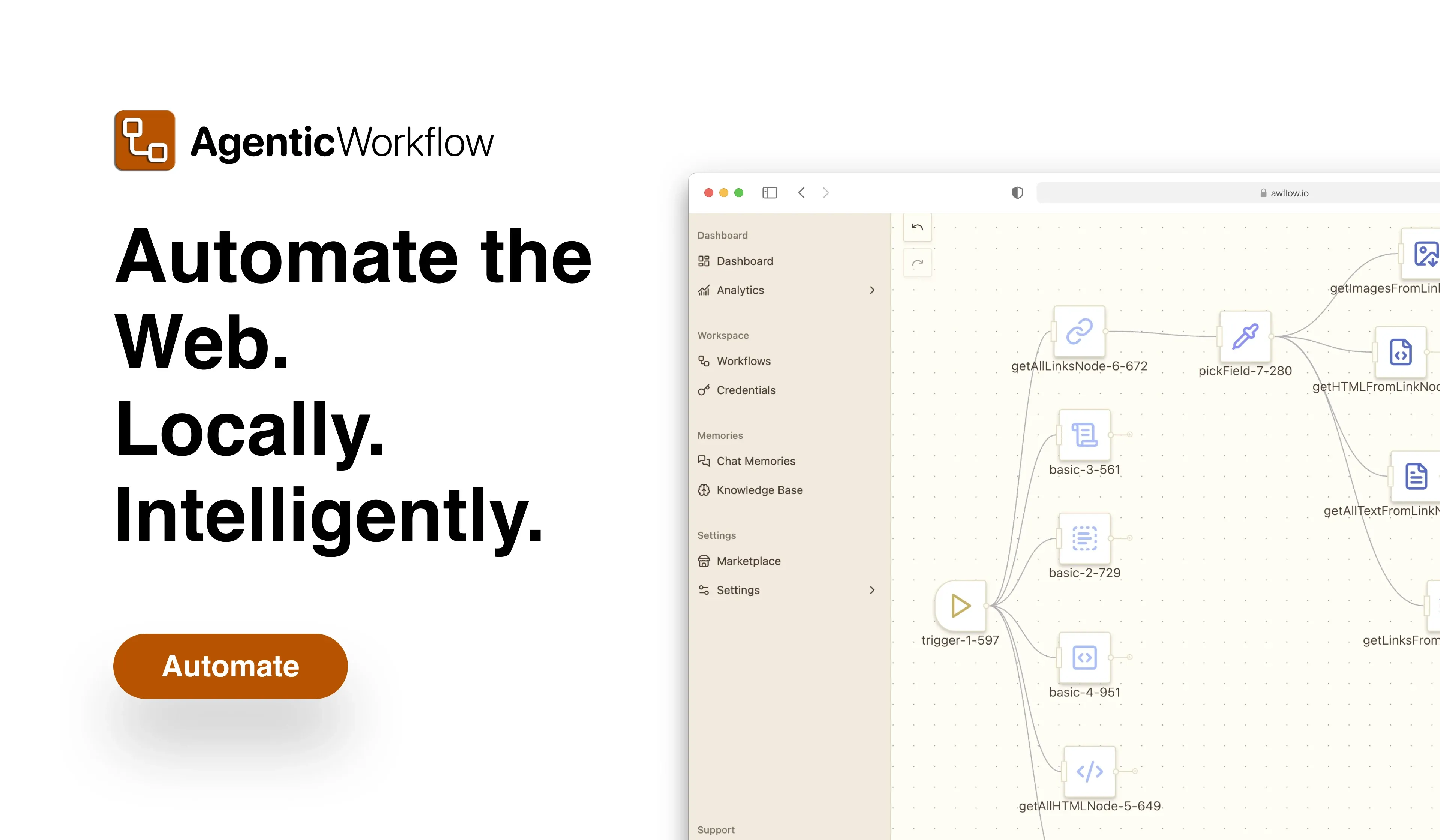
Your first LangChain workflow
Section titled “Your first LangChain workflow”Let’s build a simple content analyzer that reads web pages and extracts key insights:
-
Add content source: Drag a “Get All Text from Link” node to extract text from any webpage
-
Add AI analysis: Connect a “Basic LLM Chain” node to analyze the content
-
Configure the prompt: Tell the AI what kind of analysis you want
-
Run and see results: Execute the workflow and get intelligent insights
graph LR
    URL[Web Page URL] --> Extract[Get All Text from Link]
    Extract --> AI[Basic LLM Chain]
    AI --> Results[Key Insights]

    style Extract fill:#e1f5fe
    style AI fill:#6d28d9,stroke:#fff,color:#fff
    style Results fill:#e8f5e8
Core LangChain concepts
Section titled “Core LangChain concepts”What they are: Sequences of AI operations that process information step by step
Think of it like: An assembly line where each station adds something to the product
Example:
- Extract text from webpage
- Summarize the content
- Extract key topics
- Generate action items
Best for: Predictable, multi-step AI processing tasks
What they are: AI that can think, plan, and choose which tools to use
Think of it like: A smart assistant who figures out the best way to help you
Example:
- Goal: “Research competitor pricing”
- Agent decides: Visit websites → Extract prices → Compare data → Generate report
Best for: Complex tasks where the exact steps aren’t known in advance
What it is: Gives AI the ability to remember previous conversations and context
Think of it like: A notebook that AI uses to keep track of what happened before
Example:
- User: “Analyze this product page”
- AI: “I see it’s a smartphone with these features…”
- User: “How does it compare to the iPhone?”
- AI: “Compared to the smartphone we just analyzed…” (remembers context)
Best for: Conversational AI and workflows that build on previous interactions
Building blocks you’ll use
Section titled “Building blocks you’ll use”Language Models (LLMs)
Section titled “Language Models (LLMs)”The “brain” of your AI workflows:
| Model Type | Best For | Example Use |
|---|---|---|
| OpenAI GPT | General intelligence, creative tasks | Content writing, analysis, conversation |
| Anthropic Claude | Careful reasoning, safety-focused | Research, fact-checking, sensitive content |
| Local Models (Ollama) | Privacy, offline use | Personal data processing, no internet required |
Tools and Utilities
Section titled “Tools and Utilities”Extend what your AI can do:
| Tool Category | Purpose | Examples |
|---|---|---|
| Web Tools | Internet access and search | Wikipedia lookup, web search, API calls |
| Data Tools | Process and transform information | Calculate numbers, format data, parse files |
| Browser Tools | Interact with web pages | Extract content, fill forms, navigate sites |
Vector Stores
Section titled “Vector Stores”Smart document storage that understands meaning:
Traditional search: Finds exact word matches Vector search: Understands what you mean, even with different words
Example:
- Search: “customer complaints”
- Finds: “user feedback”, “service issues”, “client concerns”
Common workflow patterns
Section titled “Common workflow patterns”Content Analysis Pipeline
Section titled “Content Analysis Pipeline”Perfect for analyzing articles, reviews, or documents:
graph TD
    Input[Document/URL] --> Extract[Extract Content]
    Extract --> Analyze[AI Analysis]
    Analyze --> Structure[Format Results]
    Structure --> Output[Structured Insights]

    style Analyze fill:#6d28d9,stroke:#fff,color:#fff
Components used:
- Get All Text from Link (content extraction)
- Basic LLM Chain (analysis)
- Edit Fields (formatting)
Smart Q&A System
Section titled “Smart Q&A System”Build AI that answers questions about your documents:
graph TD
    Docs[Your Documents] --> Embed[Create Embeddings]
    Embed --> Store[Vector Store]
    Question[User Question] --> Search[Search Documents]
    Store --> Search
    Search --> Answer[AI Answer + Sources]

    style Store fill:#6d28d9,stroke:#fff,color:#fff
    style Answer fill:#e8f5e8
Components used:
- Document loaders (prepare content)
- Embeddings (understand meaning)
- Vector stores (smart storage)
- RAG Node (question answering)
Intelligent Agent Workflow
Section titled “Intelligent Agent Workflow”AI that can use multiple tools to accomplish goals:
graph TD
    Goal[User Goal] --> Agent[Tools Agent]
    Agent --> Tool1[Web Search]
    Agent --> Tool2[Content Extract]
    Agent --> Tool3[Data Analysis]
    Tool1 --> Result[Final Report]
    Tool2 --> Result
    Tool3 --> Result

    style Agent fill:#6d28d9,stroke:#fff,color:#fff
Components used:
- Tools Agent (intelligent coordinator)
- Multiple tools (web search, extraction, analysis)
- Memory (maintain context)
Practical examples
Section titled “Practical examples”Blog Post Analyzer
Section titled “Blog Post Analyzer”Goal: Automatically analyze blog posts for key insights
Workflow:
- Input: Blog post URL
- Extract: Get All Text from Link node
- Analyze: Basic LLM Chain with prompt: “Extract the main topic, key points, and target audience”
- Output: Structured analysis
Customer Support Assistant
Section titled “Customer Support Assistant”Goal: Answer customer questions using company documentation
Workflow:
- Prepare: Load company docs into vector store
- Question: Customer asks about policies
- Search: RAG Node finds relevant documentation
- Answer: AI provides accurate response with sources
Research Automation
Section titled “Research Automation”Goal: Gather competitive intelligence automatically
Workflow:
- Plan: Tools Agent receives research goal
- Execute: Agent chooses tools (web search, content extraction, analysis)
- Adapt: Agent adjusts approach based on what it finds
- Report: Comprehensive research summary
Next steps
Section titled “Next steps”Learn the components: Explore the Components Guide to understand all available LangChain nodes
Try workflow patterns: Check out Workflow Patterns for proven approaches to common tasks
Browser integration: Learn how to combine AI with web automation in Browser Integration
Advanced techniques: Master complex workflows with Advanced Patterns
LangChain in Agentic WorkFlow makes sophisticated AI accessible to everyone - no coding required, just smart workflow design.